Showing posts with label eco-friendly products. Show all posts

Thursday, 3 November 2022

10 environmentally-friendly Christmas gift ideas

Christmas is coming and we all know it represents a moment of joy, sharing and gifts. Often, the consumption produced during the Christmas holidays have a heavy impact on the environment, so why not give, through conscious choices, something sustainable that can reduce the impact on the environment? Let's see some examples that you can buy from our sustainable and ethical e-commerce platform Coral. With every order, we plant a tree in your name.


Mock Layer Top Banjo (3-8 Years)

Usually clothes are one on the most frequent gifts, many of them are much more polluting than we can imagine, so why not give a different shirt made of organic cotton and suitable for the whole season?

BUY HERE


Cobalt blue tied fabric necklace

It is a sustainable piece of jewelry for every season, soft to the touch and lightweight, to be worn comfortably over casual or business attire. Uniquely designed and meticulously sewn, this handcrafted piece of jewellery enhances minimal clothing. Add our necklace to your everyday outfit or for an occasion, you’re sure to receive many compliments for your originality and sensitivity to the environment, perhaps setting an example for others.

BUY HERE


Home diffuser: Ivi May - Pomegranate e Cassis

This fruity blend of blackcurrant (cassis) and pomegranate brings together two unexpected fruity scents, emitting a vibrant, sweet aroma that brightens and uplifts the spirits. it is a bamboo product,  a combination of non-toxic, non-flammable and eco friendly ingredients which have the ability to carry the fragrances over a long period of time. Nonetheless All the packaging is fully recyclable and environmentally-friendly.

BUY HERE


Barbology London Vegan Mens Survival Gift Set (4 piece set)

A perfect gift for him, an incredible set consisting of a shampoo, an oil, a conditioner and face mosturizer plus a comb. These are products with natural ingredients such as tee tre oil, jojoba oil, argan oil, suitable for any skin, a multipurpose cleanser that helps to wash away dandruff and impurities in hair or beard.

BUY HERE


Shopper 

A bag may seem like a very common gift, not very innovative, in reality we are sure that it will always be nice to receive a new one to show off, especially if eco-sustainable.


TAPP Water Ecopro Compact Water Filter


With the TAPP EcoPro Compact easy-to-install water filter, you will instantly get pure, healthy and great tasting water straight from your tap, knowing that your drinking water is free from contaminants, chemicals, micro-plastics and that healthy minerals have been retained.


Triclimb

Perfectly formed to encourage children to stand, climb and conquer at their own pace. Triclimb naturally inspires confidence and builds strength in your little ones as they reach new developmental stages. Each step on the ladder signals a new achievement and a new goal.


Warner's UK premium botanical gin - Harrington Dry


All ingredients are natural and no artificial products have been used to produce this product. Warner’s have an Environmental Policy in place to ensure we safeguard the services nature provides and examine our environmental footprint as a business.


Double Chocolate CheeZecake


A dessert is always pleasing to everyone, from the smallest to the oldest, so why not give a super nutritious cake, made exclusively with natural products, to conclude perhaps the Christmas lunch or dinner?


Maltese Honey Full Body Avanced Pack
This Maltese Honey Full body Advanced is a unique, all-in-one package containing facial and body cream moisturiser, face toner, face cleanser and face mask. Made with Maltese Honey and combined with the benefits of the beautiful Maltese islands nature, they will leave your skin feeling refreshed and rejuvenated!


These are just some of our tips for a sustainable Christmas, but on coral you can find many other innovative gift ideas, interesting for all types of people and above all eco friendly.

Friday, 23 September 2022

Why do public markets matter?

Public markets are as old as civilization. They were once a primary channel where people gathered to find the ingredients for their meals. Around the world, for centuries, the buying and selling and exchange of food and other essential products has been transacted in public marketplaces open to all. As urbanisation and industrialisation swept through, in the mid 90th century, public markets started to decline. By 1950s, supermarkets had eclipsed the old public markets in both convenience and sales volume.

Yet, public markets never wholly disappeared and they are making a comeback. In some countries, markets remained an immersive tradition and a cultural experience.  

This September, we saw the return of the original Eco Market, the summer edition at the beautiful Square in Mellieha, and it was great to see the community coming alive again, after three years! 


Eco Market in Mellieha, 2019


Eco Market in Mellieha, 2022


The Eco Market took place during EU Sustainability Mobility Week and on this occasion, we organised several mobility-related activities. For the young ones, we had free balance bikes trials, and there was also a fun obstacle course for kids on bicycle, scooter and skates. There were crafts where children had the opportunity to build their own 'futuristic' vehicle from upcycled materials. Kids also had fun learning new moves at the yoga session, and reflect during a mindfulness session.


For the adults there was an AI workshop, to better understand the role of artificial intelligence in the mobility sector and several info stalls about green jobs and cycling. 

The Eco Market's purpose goes beyong the buying and the selling. Our focus is on inspiring sustainability as a way of life and on public good. Our events create a safe active space for people with like-minded interests to learn, share and give birth to new ideas. We bring diverse people together, from retired tourists enjoying the experience and supporting local small business owners - to young children who ask their parents to take them to the Eco Market! 


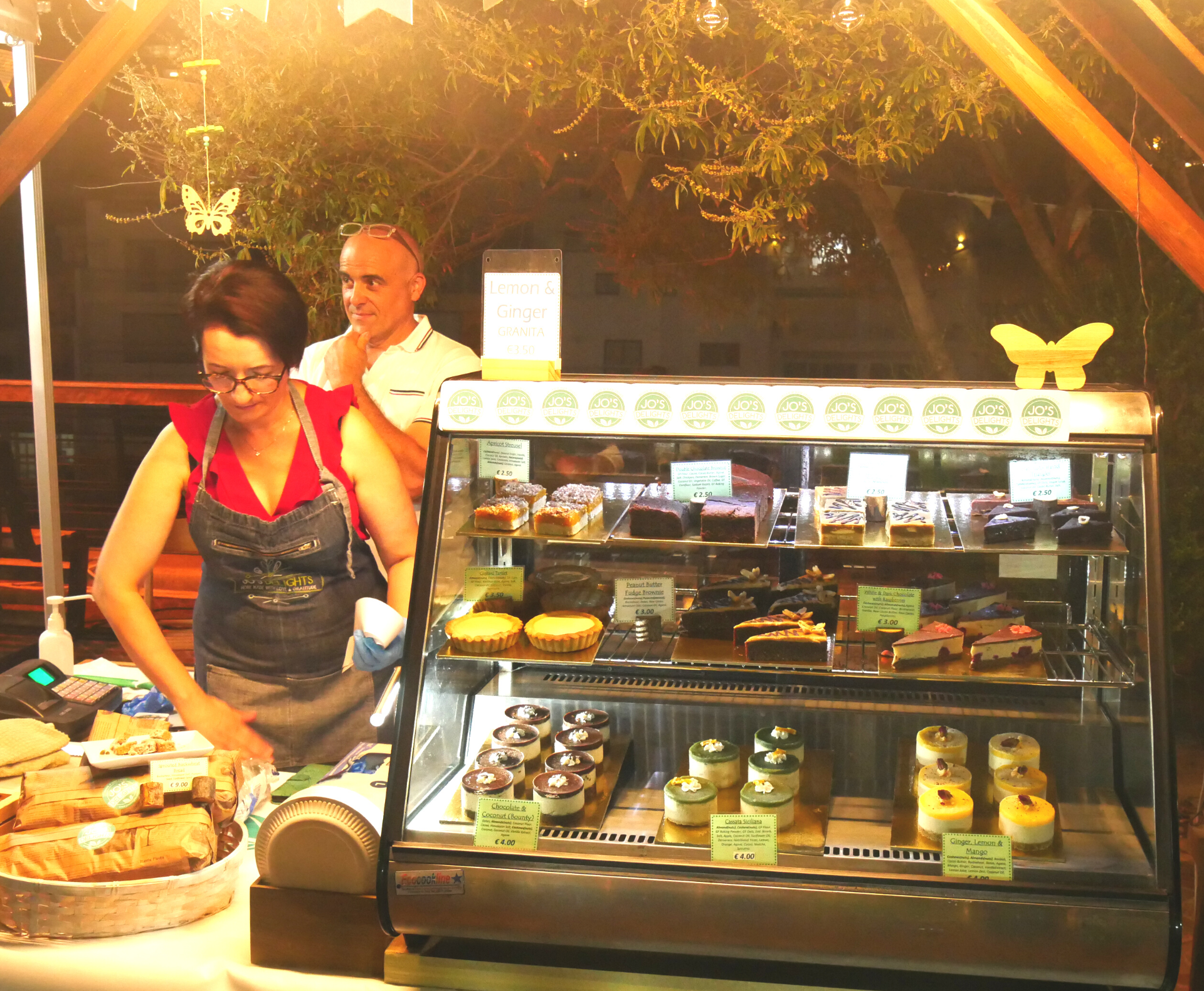
As an ethical and sustainable business, we promote public health and well-being, through plant-based food, but also vegan wines, beers and ice-cream. Also all the beauty products are chemical-free and made from natural ingredients, mostly organic. Everything is packed in a sustainable way and there is a 100% ban on all types of single-use plastics. 


Buying with purpose

Supporting small local business owners at markets has several ripple effects. From the point of view of the vendors, it is a unique opportunity. For instance, those who have just started their business have the chance to explain face to face the work behind their product to their prospective customers, while getting confident in their new role and beating the fear and anxiety that inevitably comes with a new business. For seasoned business owners, markets are an additional stream of income, especially those who do not have a brick-and-mortar store.

Buyers, on the other hand, know that purchasing something from a local brand means that the product is made with love and care, as opposed to underpaid labor, and they get to appreciate the creativity rather than seeing mass-consumed objects. They get to meet the artist or creator behind the product and establish a mutually beneficial relationship.


Eco Market vendors and their products are approved according to our sustainability criteria which looks into how the product is made, what raw materials are used, where they came from, the life-shelf of the product, and several other aspects. It is important to mention that we do not look for perfection - for we do not believe such thing exists. We believe in effort, in progress, and in a passionate heart. Therefore brands who do not use any single-use plastic, and tick at least one of our criteria, are welcome to the Eco Market. 


UPCOMING EVENTS


We're looking forward to hold Eco Market's 'Marine Life Fair' next weekend at the Square in front of the Malta National Aquarium. This is a first-of-its-kind event in Malta - a family-friendly weekend jam packed with interesting and marine-themed activities and market stalls. Have a look above for a sneak peak of activities, which will be conducted by professional marine biologists from the Aquarium staff, social enterprises and NGOs. 

Saturday 1 October from 1200 to 1700
Sunday 2 October from 1000 to 1700

Free entrance to the Fair and all the activities.
Free entrance to the Aquarium for 3 kids with every paying adult.


On Sunday 9th October, we will once again be part of 'Genna ta' Gonna' (literally, Heaven of Gardens), the open day of the city of Floriana, with all its wondrous gardens which will be open to the public, along with many other attractions of the locality.

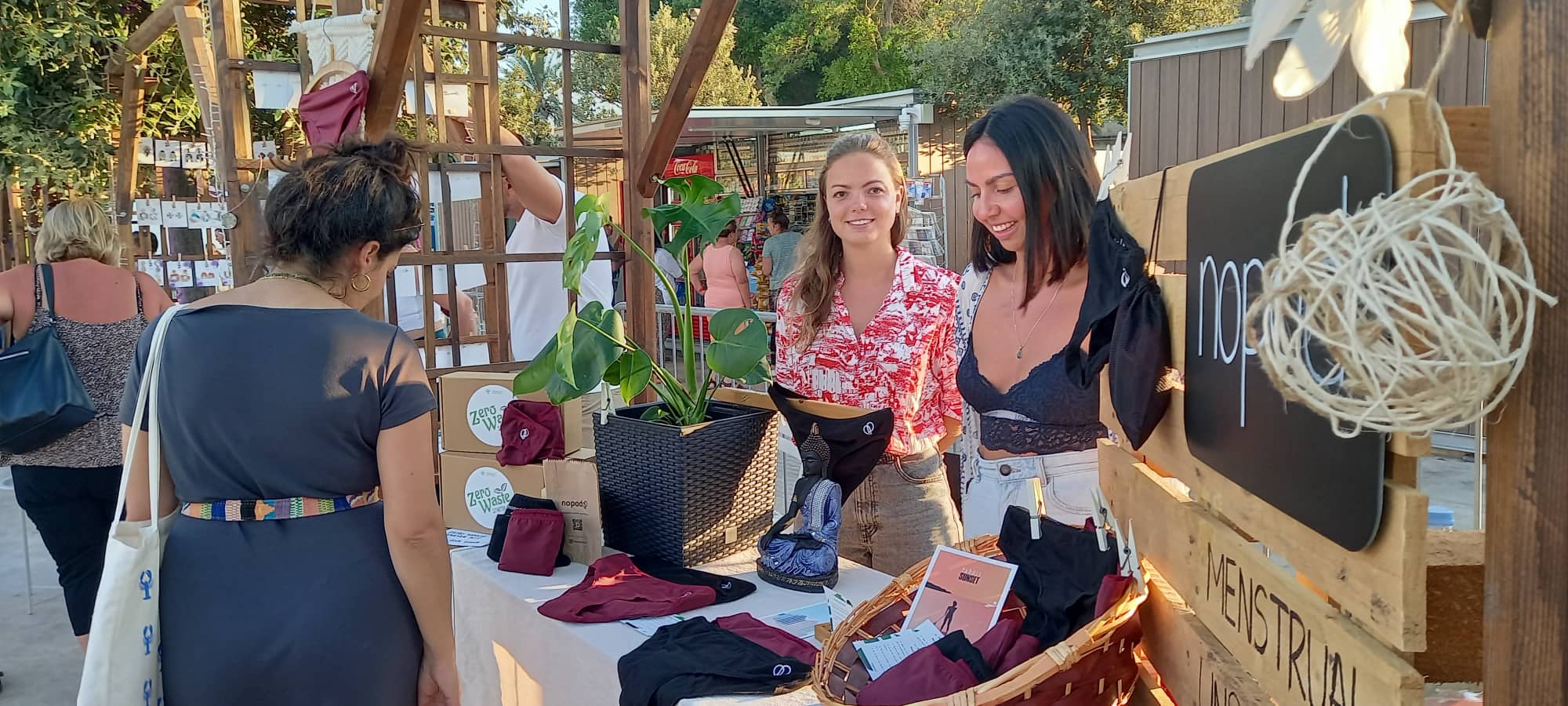
You can find the stalls of the Eco Market on the sidewalk near the main bus terminus between Floriana and Valletta from 1000 to 1700. We are planning an exciting and varied list of stalls which will include pre-loved thrifting and vintage clothing, vegan bakery and desserts, handmade luxury candles, jewellery, kids clothes, handsewn cushions, contemporary home decor, and a unique artisanal ice-cream. 

If you are looking for a unique and purposeful shopping experience, you know where we are! Looking forward to seeing you there 💚🌍🌱


Eco Market at Genna ta' Gonna 2019


Thursday, 14 July 2022

8 tips for market vendors to embrace sustainability

Market season have started and we shall be enjoying at least 3 more months of good weather this summer to hold open-air markets. The question we are often asked is: 'How do I become an eco-vendor?'.

In this blog post, we are sharing 8 tips for artisans and small business owners to help them embrace sustainability and by taking on at least some of these tips, they will automatically become eligible to participate at our Eco Markets. 


We do not seek vendors who are perfectly sustainable. We believe in effort, good will, dedication and commitment - and work with vendors who are willing to do that something extra, that something different, in order to safeguard the planet. Whichever of these tips you decide to adopt for your business, it is important to maintain your core values and ethics throughout your entire business. For instance, it would be dysfunctional to minimize the packaging, while at the same time offering a product stained with human or natural exploitation. Sustainable business owners don't look for profit only; they look for a profit with purpose.


The road to sustainability is a different journey defined by each business. It depends on how the business owner sees sustainability, what s/he wants to achieve, and what will guide him/her towards those goals. The issues that you pick should have a significant economic, social, and environmental impact. For example, conservation of water may be material to a company like Coca-Cola, but not for Google, which may focus more on clean and efficient energy solutions. 

Let's have a look at the proposed tips


1. Sourcing Materials


When you source locally you cut down on fuel emissions and pollution generated by transportation, usually across continents. A locally-sourced product has a much smaller carbon footprint. Small businesses depend on their local communities to survive and your support will also make it easier for you to build a lasting, trustworthy partnership with your suppliers when you can meet them face-toface. Sourcing locally will also boost your brand and sales because research shows that people are willing to pay a bit more for a product that provides value to the local community and the planet. Moreover, a locally sourced and produced product fosters national pride.

Set up a policy where you clearly explain your supply chain values and morals. Then research for suppliers that match the same ethical guidelines. Establish a trust relationship with your suppliers and keep track of their work and their progress.


2. Packaging


The most sustainable kind of packaging to use is corrugated cardboard. They have exceptional reusability and can be 100% recycled. Paper packaging is recyclable and can also be compostable. All kinds of single-use plastic should be banned. It is one of the main culprits of pollution, and harms the environment before being manufactured and long after its short-lived life. Styrofoam (jablo) is also to be avoided. Plastic is acceptable only when it strong, durable, and can be reused an unlimited number of times.

Several options are still in their early days, like mushroom packaging, seaweed packaging, peanut packaging that dissolves with water, and bioplastics, made from various renewable plants such as cornstarch and straw. These eco-packaging alternatives are becoming more and more in demand and soon will be globally available and accessible.


3. Shipping & delivery


After you have established environmentally-friendly packaging options, it is time to educate your consumers on how to recycle, or how they can re-use your packaging. A small note on the packaging illustrating how to dispose of it or some creative repurposing ideas will have a great impact on the consumer experience. Also, you need to ensure that your packaging is no bigger than it needs to be to hold your product and without any superfluous layers. It could be tempting to beautify your packaging and make it look more attractive, however, your ecoconscious consumers will certainly appreciate the simplicity and eco-features of your packaging.

To cushion and protect your products, especially for fragile items, avoid bubble wrap unless it is being re-used. Some alternatives include shredded paper from newspapers and magazines, or be creative and use fabric from unwanted pieces of clothes.


4. Go 'Green'


Whether you work from home, or in an office, there are several ways to 'green' your own working space, which you can start doing already today, such as: convert to LEDs, turn off lights and unplug all electronics at the end of the day, reduce on printing, use both sides of the paper, recycle properly, and include a green reminder in your email signature; these can make a big difference on the environment and your pocket in the long run.

If you want and can take it a step further, you can opt for a small solar panel to fuel your working space, sort out your trash more carefully, buy a re-usable notepad, opt for  online meetings instead of in-person, or at least car-pool or cycle to meetings, and choose eco-friendly office products, from your coffee to your printer. Don't forget to add a plant or two. Plants do more than just make the place look pretty; they absorb air pollution, help reduce stress, increase productivity, and boost creativity.


5. Waste reduction


By establishing environmentally friendly packaging protocols, and taking a number of easy steps towards greening your working space, you are already contributing to the decrease of waste. You can also start choosing your electronic equipment carefully by researching for brands that hold up to your same environmental standards and values. Choose companies who incentivize their clients to return their old electronic when buying a new one, for example. E-waste is the fastest growing waste stream in the world. The majority of these end up in landfills but many of the materials can be recovered, reused, and recycled. Disposing of electronic equipment responsibly not only reduces environmental impact but also creates green jobs and empowers the social economy.

Watch out for Waste Reduction Week in October for ideas and opportunities. 


6. Raise the life-cycle


When we throw away something, it still needs to go somewhere. As a sustainable business, you need to consider how you can increase and elevate your product's life cycle and delay it's throwing 'away' for as long as possible. This will largely depend on your industry, however, and will involve decisions on your manufacturing process and price strategy. For instance, certain materials are more durable than others but may be more expensive.

Other ideas you can examine include a return and refill scheme where customers can return the original container and re-fill it again; or a return and discount scheme, where customers can return the original packaging or part, and purchase a new one at a reduced price. Alternatively, you can use your influential power to give ideas to your customers on how they can re-purpose and re-use without resorting to landfills.


7. Get verified


Certification provides a guarantee that a product is truly ecological as it claims and is regularly controlled. To provide an element of trust to the customer, certification can only be issued by an independent body. There are several verifications bodies in Europe, specializing in different sectors, however, the most popular ones are Ecolabel and B Corp.

The advantages of eco-verification include a cutting-edge advantage in respect to your competitors, customer loyalty, community recognition, a trust-worthy and good reputation, economic benefits arising from your thoughtful initiatives, and the confidence that your business is truly making a positive impact, Getting verified is not free but the annual fees vary according to the business's income. There is also the B Impact Assessment, a free online platform that evaluates your business and helps you get started.


8. Marketing


As an eco-friendly small business owner, you should be proud of showing your commitment to being socially responsible and doing your part to protect the environment, so make sure your customers know it. Incorporate your green efforts into your marketing strategy. You may want to ask for more 'green' ideas directly from your customers; their insight will certainly be extremely valuable to you. Communicate sustainability at every opportunity to ingrain it into people's minds and in your subconscious. If you are implementing a significant new eco-innovation in your business, you might want to reconsider re-branding in order to re-align your image with your new purpose.

Before you start marketing your green biz, make sure you  are practising what you preach. or chances are that more sooner than later, you'll be exposed for greenwashing and cause irreparable damage to your business.


Eco Market will be hosting a Midsummer's Night Market at the most anticipated, family-friendly summer festival - The Farsons Beer Fest - at Ta' Qali. We will be showcasing some of Malta's top eco-friendly brands and products, in a beautiful area under the shade of this cluster of trees.


Applications for vendors are now out. 


Wednesday, 4 May 2022

Making e-commerce packaging sustainable

The rise of e-commerce through Amazon and other online marketplaces has made all of our needs available to us with just a few clicks of a button. The convenience and accessibility of e-commerce have led to a major rise in online shopping that’s projected to double over the next four years.


Unfortunately, the rise of e-commerce has brought with it an increase in single-use plastic and packaging materials that flood landfills. Currently, packaging materials make up approximately 65% of all household waste , with that number projected to increase dramatically by 2050 if no changes are made.

In today's blog post we look into how e-commerce can be improved to reduce waste and make our shopping habits more sustainable.

The Problem In e-Commerce Waste

E-commerce currently accounts for 13% of all retail in the United States and is predicted to increase exponentially over the coming decades. In some ways, e-commerce is more sustainable than shopping in physical stores, as it reduces the amount of mass shipping needed to distribute goods to stores - and eliminates the emissions from customers driving to the store and back. 

However, the fundamental problem with e-commerce lies in its excess packaging. Often we see our purchases packaged in plastic wrap inside at least one cardboard box. The plastic used in shipping is most often designed for single-use purposes and then thrown away once the package has been safely delivered. This leads to massive amounts of plastic waste in landfills and our environment, as the vast majority of shipping materials are not designed to be recyclable or reusable.


Shipping materials have improved dramatically over the past few decades, but as e-commerce begins to overtake traditional retail, packaging systems need further efforts towards sustainability. The heavy usage of Styrofoam packaging has been on the decline for several years, but the cardboard and single-use plastics that make up our packaging still account for more than half of our household wastes. As the use of e-commerce is expected to rise in the coming years, the plastic pollution that comes with it will outweigh the progress that has been made.


Finding Sustainability in e-Commerce

Companies around the world are looking to improve their packaging systems to be more sustainable. Amazon has recently recognized the growing trend of using disproportionately large cardboard boxes to ship small products, as well as using split shipping to separate multi-item orders into multiple shipments. While Amazon is undoubtedly still a major contributor to environmental problems, after recognizing and addressing these concerns, Amazon has worked to eliminate more than 83 million cardboard packaging boxes. 

Many online companies are using environmental auditing services to improve their quality management systems. A significant portion of a product’s waste comes from its supply chain, but approximately 69% of companies lack full supply chain transparency. By analyzing quality management systems, companies can track and manage their supply chains to gain better control of their packaging and shipping processes. In an effort to reduce the dependence on single-use material, companies can invest in biodegradable packaging. 


Biodegradable materials differ from traditional recyclable cardboard in that they are designed to degrade without leaving any harmful residues in the environment. Recyclable materials are a limited and imperfect system, as materials can only be resalvaged a few times before the material is no longer usable. Biodegradable packaging, however, is designed to break down after a few months, leaving no waste behind.


Some options for biodegradable packaging include materials made of:

● Cornstarch

● Sugarcane

● Bamboo

● Mushrooms


These types of materials can double for both plastic and cardboard substitutes, and can help significantly reduce the amount of long-term waste e-commerce generates. 

The effort to reduce packaging waste rests not only on the shoulders of e-commerce merchants, but on consumers as well. By pressuring online sellers to transition away from single-use materials, consumers can use their purchasing power to shift online retail industries into more sustainable practices. 


As conscious consumers, we have the responsibility to reach out to our favourite brand and demand more sustainable products and packaging. With enough pressure, companies have no choice but to do what their customers expect them to. Next time you receive a delivery, and you notice excessive and single use packaging, email the brand and ask them to switch to sustainable packaging.